

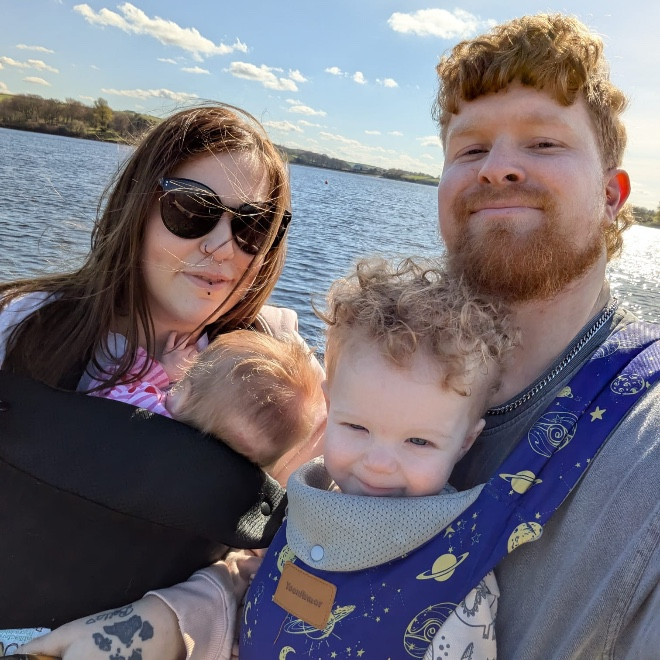
We're stronger together
We are taking part in One Walk Manchester to help raise money to fund life-changing research and make a difference to the lives of people affected by type 1!
Breakthrough T1D funds world-class research, supports the T1D community and campaigns for broader NHS provision of treatments and technologies. Their collaborations with the best researchers in the world have led to new developments in diabetes technology and treatment.
This is where you come in. With your support and your generous donations, we can fund Breakthrough T1D’s important work.
Just £5 could help towards the next big T1D breakthrough.
Whatever you can donate, it is really appreciated - thank you!
I was diagnosed with type 1 diabetes at just 9 years old. From that moment, my childhood changed completely. It became filled with finger pricks, syringes, endless medical appointments, hypos, and hospital admissions. While other kids were carefree, I was learning how to count carbohydrates and calculate insulin doses. Every single day – every minute – has been shaped by managing this condition.
Over the years, technology has come a long way, and I’m incredibly grateful that I now use a continuous glucose monitor instead of constant finger pricking. But even with these advancements, diabetes is relentless. I’ve lost count of how many times I’ve been hospitalised due to diabetic ketoacidosis.
Now, I’m facing further complications in the form of diabetic retinopathy. This involves ongoing, invasive treatments including laser eye surgery, injections directly into my eyeballs, and vitrectomy procedures. It’s a side of diabetes that many people don’t see… excuse the pun. However, these treatments would not be available without the work of charities like Breakthrough Diabetes. During my Grandma's time with diabetes, had she had these complications she would most likely have gone completely blind. I am very fortunate there are options available to protect my vision.
Diabetes has also had a huge impact on my pregnancies. During my first pregnancy, I experienced placenta failure and needed an emergency C-section at 34 weeks and 5 days. What made it even more frightening was that the warning signs – a sudden drop in insulin needs and frequent low blood sugars – weren’t recognised by the senior doctor I saw. As someone who knows my condition inside out, not being listened to in such a critical moment was terrifying. I was very fortunate that a midwife I saw the next day for routine blood pressure checks did recognise it, and our son was delivered the next day.
My second pregnancy was very different, thanks to an incredible midwife who supported and advocated for me every step of the way. Even so, it wasn’t easy. My insulin resistance was extreme, and I needed ten times more insulin than ever before. Although my baby girl was born at full term, she required six days in NICU to stabilise her blood sugars due to the effects of my condition.
My biggest fear is that one or both of my children will develop type 1 diabetes. I wouldn’t wish this illness on anyone.
Despite everything, I’m incredibly lucky to have the most supportive family. My 6-year-old stepdaughter already understands so much – she knows that when my glucose monitor alarms, I need orange juice. She tells people my pancreas is “broken” and explains that hers works by giving her insulin when she needs it. My husband has my glucose monitor connected to his phone, so he gets alerts when my sugars drop and is always there with glucose before I even have to ask.
Unfortunately, alongside the physical and emotional toll of diabetes, I’ve also faced incredibly frustrating and, at times, dangerous experiences with medical professionals who simply didn’t understand type 1 diabetes.
I’ve been on hospital wards where I was refused insulin despite dangerously high blood sugars, because I was told “your insulin is only prescribed at meal times.” Anyone living with type 1 diabetes knows that insulin is not optional – it is life-saving and needs to be adjusted constantly, not just around meals.
On another occasion, while camping, I went into diabetic ketoacidosis. Paramedics attended but didn’t understand how to use their own glucose monitoring equipment properly and were prepared to leave me in a field. It was only because my brother was on speakerphone, advocating for me and insisting that I know my own body and the signs of DKA, that I was taken seriously. Without that intervention, I genuinely believe I may not be here today.
I’ve also been told off for eating things that “diabetics shouldn’t eat” – an outdated and harmful misconception. The reality is that people with type 1 diabetes can eat what they choose, as long as they calculate and administer the correct insulin dose.
I have faced discrimination in the workplace, having colleagues ask me to do my injections in the toilets because they didn't like needles.
These experiences highlight just how much more awareness, education, and research is still needed – not just for better treatments, but for better understanding and care.
This is why I’m doing this walk. Because no child should have their childhood taken away. Because no parent should live with this fear. And because we desperately need better treatments – and ultimately, a cure.
Thank you so much for your support 💙
My Achievements

Shared page

Added profile picture

Self donated

Reached 50% of fundraising goal

Reached fundraising goal
Thank you to my Sponsors

£52.52
Melanie Baynes
£37.47
Amber
£25
Dad
£20
Chloe Frost
Well done!
£16.56
Cali Beck
£14.50
Anonymous
£12
Lizzy Horn
£11.33
Robbie Dixon
£11.33
Mel Wildman
Well done to you all, such a good cause. Sending lots of love xx
£11.33
Charlotte Beare
£11.33
Tara Constable Peacey
£11.33
Conor Taunton
£10
Gemma King
Go Heath family 💙 such an important cause!
£10
Cody
Good luck team! Youse will smash it and all for a great cause! Love Cody & Evanna xxx
£6.11
Robbo
£5

